Robert Westall Lecture, 2022, YLG
Now and again my journal becomes a vehicle for the voices of other folk. My very good friend, Nicola Davies, has asked me to host for her the words of the Robert Westall Memorial Lecture she delivered at the YLG conference in September 2022. ( YLG is, for those who don’t know, a wonderful organisation of Youth Library Groups, so under threat in our current climate of political vandalism. They maintain libraries in schools, with trained librarians. They are at the forefront of democracy of knowledge. They are guides and guardians of young people. They are heroes).
Nicola is a voice for hope in a difficult world. Do take a look at her books. She has helped to show a generation of children the beauty of the wilder world through her words and images.
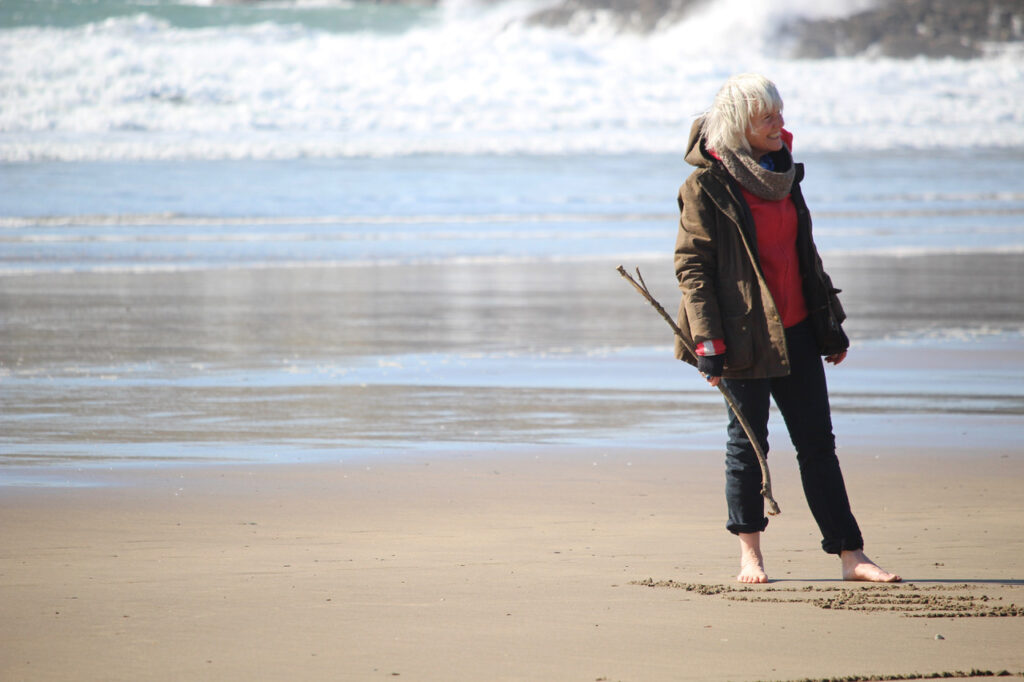
This is the text of the Robert Westall Memorial Lecture that I was kindly asked to deliver at the Youth Libraries Group conference in Sheffield on September 18th 2022. Several people asked me afterwards if the text could be made available online. So, thanks to my dear friend, Jackie Morris, here it is…
SIDE BY SIDE WITH THE GENERATIONS
I have to begin this lecture with a somewhat shameful confession. When Jake Hope got in touch to ask me to deliver the Robert Westall memorial lecture, I had only the vaguest idea of who Robert Westall was. My excuse is that I’m too old. By the time his first book, the Carniege winning ‘The Machine Gunners’, was published in 1975, I was 17 and in the greatest phase of literary snobbery of my entire life. For ten years I didn’t read anything that didn’t come in the severe, black coat of a Penguin Classic or the feminist, racing green of Virago. If I tell you that, in spite of having only grade 4 O level French, I read Alain Fournier’s ‘The Lost Domain’ aloud to myself, in French, I think you’ll have a good idea of what a literary prig I was. If YA had been invented back then, I would have turned up my spotty nose at all of it. So Robert’s books, with their compellingly energetic narrative voice, vivid, direct style and addictive plots, passed me by.
But my husband, Dan, is of a different generation. He is very fond of reminding me that he was still in primary school when I was doing my A levels. So, when Robert’s books began to arrive in the post, Dan became a little misty eyed, particularly over ‘The Machine Gunners’. He had read it multiple times as an adventurous little boy, and imagined himself sitting behind that stolen German gun, that could ‘shoot through a brick wall at a quarter of a mile’. After more than forty years he remembered the story, the atmosphere of it, and how it made him feel.
What we read throughout our lives influences what we think and how we think it. For example, when I finished Toni Morrisons’ ‘Beloved’ I understood that there were worse things than dying. John Berger’s ways of seeing changed how I looked at the world for ever. But what helped to shape who I am, were the things I read as a child – Gerald Durrell’s animal catching adventures in West Africa and South America – was there ever a better title than ‘Two Singles To Adventure’ ? – and Tolkein’s ‘Lord of the Rings’.A part of me is always struggling to live up to Eowyn: disguised as a the male warrior Dernhelm to enter battle, she stands up to the Witch King Of Angmar.
“Begone, foul dwimmerlaik, lord of carrion! Leave the dead in peace!”
A cold voice answered: ‘Come not between the Nazgûl and his prey! Or he will not slay thee in thy turn. He will bear thee away to the houses of lamentation, beyond all darkness, where thy flesh shall be devoured, and thy shrivelled mind be left naked to the Lidless Eye.”
A sword rang as it was drawn. “Do what you will; but I will hinder it, if I may.”
“Hinder me? Thou fool. No living man may hinder me!”
Then Merry heard of all sounds in that hour the strangest. It seemed that Dernhelm laughed, and the clear voice was like the ring of steel. “But no living man am I!”
Part of the reason that I write for children is that I am still the dreamy ten year old who read Lord of the Rings, and who imagined travelling the world to see animals, to raise Eowyn’s sword to fight for them. But another big part of my motivation is to have the chance to shape the interior landscape of my readers – because that’s what books for children and young people do, they become a part of the minds of their readers.
I’ll come back to my motivations for writing in a moment, but I want to return to Robert Westall now and his motivations. Robert wanted his books to be realistic and to represent the lives and behaviour of real children. That meant including things that some adults would rather not see represented in children’s literature, like bad language. At times, Robert’s commitment to realism earned him the same kind of criticism that Melvin Burgess had to put up with over ‘My Life As A Bitch’.
I can’t claim to have any kind of finger on the pulse of YA fiction but my gut feeling is that critics don’t make such a fuss any more about representing the adolescent realities of sex ’n drugs ’n rock and roll. In my experience, there’s another aspect of reality that is giving the children’s book world a headache.
As you may, or may not, know my writing territory is the natural world and I’ve written non fiction, fiction and poetry about nature and human relationships with it. Some editors have always had a problem getting their heads around ‘nature red in tooth and claw’. For example, there is a passage in my picture book ‘Ice Bear’, illustrated by the incomparable Gary Blythe, about the alone-ness of polar bear cubs once Mum has raised them
In Spring Mother polar takes them hunting. For two years she’ll protect and feed them until they’re learnt like her to hunt alone…
Alone through summers when the sun tracks up and down the sky and one day passes to another with no night between.
Alone through winters when the sun never rises and the stars of the Great bear sparkle in the darkness. l
My US editor was horrified. Wouldn’t the idea of being alone in the great wilderness of the Arctic scare the wits out of my small readers? Couldn’t I leave out all the alone stuff?
Well, where do I start?
Suffice it too say that, once I had pointed out the granny eating Wolf in Red Riding Hood, the murderous step mother in Snow White, Sauron, and he Shall Not Be Named, my lone polar bear did not have to acquire fictional companions or become the only colonial bear species on the planet.
My job as a non fiction author is not to sanitise the world for the sake of the squeamish; my job as a children’s author is to help readers to understand the world and to open conversations about even the most difficult subjects. I haven’t confined myself to writing about the bloody exploits of animal predators – I’ve written about human death and disability, war and displacement.
But in the face of climate change and the polarised politics around it, writing for children is becoming tricky.
I have been asked several times in the last two years to ‘cheer up’ the messages in my texts relating to climate change. In one case to completely remove all references to it. I would say here that these books that I’m referring to weren’t apocalyptic doom mongering. The real life animal stories that I had chosen to cover in them were picked because they had some positive aspect – a successful conservation project, or some possibility of helpful human intervention, or a species showing resilience in the face of all we throw at it. In all these cases, I stuck to my guns, won the argument and the books appeared with their truths in tact.
So, I can get away with talking about how emperor penguins have an inbuilt adaptability which may help them survive the anthropocene. Or how African environmentalists are helping some subsistence farmers live with large, destructive neighbours, like giraffe. I can even get away with suggesting that children wear an extra jersey, or bike to school to ‘help fight climate change’.
But, ladies and gentlemen, extra jerseys and bikes are not going to cut it. Individual actions like turning down the heating or eating less meat do have important impacts but what is required to prevent us from frying, is huge political change, a mass realisation that our priorities have to do a 180- degree turn, and fast.
And there’s no way on earth I’m going to be aloud to say that in a non fiction picture book.
So, in the dark days of the first lock down, when I couldn’t visit schools or go to literary festivals, I used the enforced inactivity to invent a fantasy world that I hoped would shine a light on the real world and the things we are getting wrong. In the world of my novel, ‘The Song that Sings Us’ (at 105 thousand words about as far from a 600 word picture book text as you can get) most human societies have held on to the sustainable, nature-respecting culture of ancestral, indigenous peoples. But a revolutionary force, The Automators has arisen, deriding the tyranny of nature and inciting human kind to begin to exploit the natural world: to use fossil fuels instead of solar and wind power, to cut down forests and generally behave the way we do in the real world. The Automators don’t want to listen to any voices but their own; they certainly don’t want to hear from animals, and their human translators, who are in my fantasy world called the Listeners. In this fantasy world I could tell some of truths that I was not allowed to tell elsewhere.
In this little extract, one of the young characters Ash, a 12 year old boy, has been kidnapped and forced to work extracting oil from beneath the frozen sea. In a world where solar and wind power are the norm, the use of oil seems strange to Ash. He looks at posters advertising vehicles drivel by it and can’t understand why his friend Mabbet is so enamoured of them.
Ash looked at the posters on the walls of the canteen.
“Freedom! Travel without a recharge.” the words said. There were pictures of people driving one of the little oil powered veekles called ‘karz’. The people in the pictures were smiling, smiling smiling.
‘Wouldn’t you love one of those?’ Mabbet said dreamily, ‘I would. I think I want a red one. I’m gonna get one, someday, when I get away from here.’
Some of the posters showed solar panels and windmills torn down.
“Escape from the tyranny of nature! “the posters cried.
‘Why wait for wind to blow or the sun to shine? Be free ! Use Oil instead!’
Ash didn’t get it. Why bother with oil, when the sun did shine and the wind did blow, pretty much all the time. But, finally, he understood: wind and sunshine were free, but the Automators owned oil.
In ‘The Song That Sings Us’, there is (plot spoiler alert) a more or less happy ending. The dark influence of the Automators is turned aside, not by the action of a single, saviour character, but by collective action of everyone ‘singing together’. I realise that this is an almost naive, utopian vision, but I really wanted to tell my readers that the solutions to our environmental ills are well within our grasp. The frustrating truth is that, scientifically and practically, climate change does not present totally insoluble problems. Big, vast, huge, difficult, challenging but not insoluble. It’s a situation that reminds me of something I once heard a beauty expert say about the effect of moisturiser on wrinkles – buying it is all very well but it only really works if you put it on your face. What we lack is the political will and leadership to apply the solutions we know will work and help.
This can make the whole situation seem hopeless, and leave children’s writers wondering what is the point of what we do. The author Anne Rooney, many of whose books you will have encountered, said this in a recent post on the Awfully Big Blog Adventure
I write (mostly) children’s non-fiction with a focus on science. That means climate change, loss of biodiversity, pollution, extinction and all the other self-inflicted ills of the world are on my agenda. As we reach, and probably pass, tipping points that mean our current way of life is doomed, it’s hard to know how to present this gloomy prospect to young readers.
To ignore this is dishonest and leaves the books incomplete. To acknowledge it and disarm the fear it raises is increasingly difficult, now near-impossible. ..
I’m not particularly optimistic about our prospects any more, and no longer want to pretend to be optimistic.
That’s not encouraging if you’re eight and want to grow up and have a fulfilling life. There’s no way of putting a positive spin on it.
The response of some editors, authors to this situation maybe to go on editing out the difficult bits or to just write about farts to keep the terrible truth away from the ears of poor vulnerable kiddies. But even if it were possible to shield children from the realities of climate chaos at what point do we unwrap the cotton wool and then tell them?
As Anne Rooney said in her blog post
As I write, a third of Pakistan is under water and California is burning. More and more young readers can see what’s happening because it’s on their doorsteps. We can’t hide it; we need to know how to talk about it.
This is something that we all have to address. Not just in the way we talk to and write for our kids, but how we cope with our own feelings when we wake up in the dead of night and wonder if society as we know it will last another five years, another ten, another 20? Is the best skill we can teach our children how to shoot straight and make a meal from rat?
I think there’s a lifeline in one of the things Robert Westall said about his motivation for writing the machine gunners. He said he wanted to share his experience of growing up in wartime Tyneside with is son Christopher, so that
‘the generations could stand side by side, even of only for a moment’
I think this idea of generations standing side by side offers us help in a number of ways.
We are a society, a culture, very foucussed on ‘me’ and ‘now’. That focus has served us pretty badly and is largely responsible for getting us into our current pickle. Our inability to see a bigger picture, a longer perspective means we are very susceptible to those with a vested interest in ‘business as usual’ telling us that nothing can change, that everything we know about how the world works, has always been this way and always will be. But a longer perspective might tell a different story.
There’s just a chance standing ourselves beside other generations both past and future might be helpful.
Us environmentalist Paul Hawken in his book Re- Generation talks about the sustainable practices of Chadien pastoralists. They judge every action they take on the ‘seven generations principle’. They ask themselves how what they do will affect their people seven generations into the future. To inform their decision making on this principle, all members of any pastoralist group are well educated in what the previous seven generations got up to.
So let’s look back seven generations into our our own past. The generally agreed length of a generation is 25 years. That takes us back 175 years to 1847. Darwin was 12 years away from publishing the Origin Of Species. Victoria was a young queen. The industrial revolution had already happened. Britain had already burned over10 million tons of coal to power it. The UK was the chief manufacturer of all manner of goods exported out across the world. The Empire was in full swing. In Britain’s industrial towns children worked; people lived in unimaginable squalor, with cholera outbreaks almost a routine occurrence. Irish farm workers were starving to death in the second year of the Potato famine,
The industrialists, bankers, and politicians of that time did not think seven generations ahead, or if they did it was only to raise self aggrandising statues to themselves. If they had the vision of Chadien pastoralists they might have seen the consequences of their actions. A world where 9 individuals would own more than half of the wealth of the planet. Yes, 9 billionaires own more, have greater wealth, than half of earth’s human inhabitants altogether.
I believe that statistic sums up the the crisis in our modern world. A crisis whose roots we can see very clearly if we look back seven generations. The roots that lie in the social inequalities of the industrial revolution and the exploitative and racist culture of the empire. When you look at the big picture, its inequality and the way humans treat other humans that is the real root of climate chaos.
There are other roots in 1847 too. Roots of change. The Us Congressman George Perkins Marsh was the first person – outside of indigenous communities- to raise the alarm about the possible consequences of pollution, and habitat loss, particularly the destruction of forests and wetlands, for the climate
Man cannot at his pleasure command the rain and the sunshine, the wind and frost and snow, yet it is certain that climate itself has in many instances been gradually changed and ameliorated or deteriorated by human action.
Under the influence of Marsh and other early environmentalists like John Muir, Abraham Lincoln set up the first of the great American National Parks, Yosemite.
In Britain, social reforms brought better conditions for working people. 10 year olds are not expected to work. We have an NHS (well at least for now..) and financial support for those who can’t work. It’s not perfect, but its a good deal better than anything 7 generations back.
These reforms did not come without struggle. There were revolts, uprisings and activism of many kinds and although these were sometimes violently suppressed, they still, gradually brought about change.
Children need to know the roots of our problems, and they need to know how ordinary people brought about change in the past, so that they can see it is possible in the future. The worst and most damaging part of the climate crisis for us all, but for our young people especially is the sense of disengagement and powerlessness. Stories that show the roots of the problems are empowering because, as any gardener knows, you need to pull up the roots to get rid of a weed.
But looking back is only the first part of seeing where we stand more clearly. We must of course look ahead 7 generations. And right now, for many people that’s terrifying. The predictions and statistics about climate change are so frightening that we can feel like a rabbit caught in the headlights of an oncoming car. One of my own family, once an XR activist has given up all activism and has decided simply to live her life as happily as possible, because ‘in five years society as we know it is going to collapse’. Planning any kind of normal life with long term commitments seems impossible for her. And many other young people I know feel the same.
It suits the climate change deniers and disaster capitalists, like Jacob Rees Mogg and his ilk, very well that we are all so paralysed. That we are afraid of what will happen if we do nothing and afraid of what we will have to give up if we do take action.
So let’s just put our fear in a bucket for a minute and try to think.
One of the biggest problems in our attitude to climate change is focussing on bad change, change for the worse. Fiction particularly fiction for young people is really guilty of gloating over the apocalypse.
It is of course the ultimate drama and a great way of getting rid of all the complicated bits of reality you don’t want and setting up a nasty but dramatically satisfying imaginary world. I’ve done it too…I’m not pointing any fingers.
Instead, just imagine change for the better.
Supposing for example we all mostly gave up meat and dairy. You still a couple of roast dinners a year but the rest of the time you’re vegan. You get an extra 15 years of life.
Supposing we switched to non fossil fuel power generation. No more worrying about some megalomaniac cutting off the gas supply.
Supposing we had a network of affordable trains and rechargeable electric bikes so you didn’t really need a car any more. No more February Tuesdays sitting in a traffic jam with somebody’s fumes up your nose.
Supposing we decided that it really wasn’t Ok for half of Pakistan to be underwater and for Maldivians not to have a country. Many millions of people not living in terrible suffering.
Supposing we watched birds instead of screens.
Supposing all the food you ate was grown within 10 miles of where you lived.
Supposing our towns and cities were full of gardens and wild parks.
Supposing we prioritised trees over toasters and designer clothes.
Supposing we decided that 9 people owning half the planet’s wealth was no longer going to be something we accepted.
Paul Hawken, who I quoted earlier and whose work I commend to you, points out that the language around climate change is the language of the battlefield. We talk – I have talked – about fighting, combatting, defeating climate change. But all of things I’ve mentioned above are the things we need to do to turn our current problem into one big solution for the whole world.
Does any of it sound like a fight to you?
What climate change presents to the coming generations isn’t a death sentence but a challenge against which to test their skills and redefine the meaning of humanity. Climate change offers an opportunity to be part of a huge and wonderful project, the task of planet healing. The focus is no longer on shallow gratification but on finding answers, in every aspect of every life, to the question ‘How can I be a good ancestor?’ On standing side by side with the 7th generation into the future and looking back at our behaviour now.
Once upon a time, not so very long ago we had that kind of long view. We as individuals were able to dedicate our lives to the building of something much bigger than ourselves and whose completion we would never live to see. York Minster took 250 years to build, Notre Dame took 182 years. Capability Brown planted trees that would be full grown a hundred years and more after his death.
That thinking isn’t so far from our hearts now as you might imagine. Last year in the run up to the Earth summit every school in Glasgow – and I mean EVERY school not just posh ones- sent children to a 13 hectare site on the edge of Glasgow to plant trees to make The Lost Woods children’s woodland. My story, The Promise, illustrated by Laura Carlin had been a part of the run up to the planting. Walker books had very kindly facilitated schools receiving copies of the story and every school had a screening of the animated film of the book. So I was lucky enough to visit the site on a beautiful october day. Hundreds and hundreds of children were planting trees. In all my years of working with kids, nature and the environment I have never seen children so excited, so utterly inspired. It wasn’t just a jolly day mucking around out of the classroom for those kids, they really understood what they were doing.
They said things like
I’ll come back here every year with my mum’
I’ll come back with my children
I’ll come back with my grandchildren.
They were standing side by side with their future selves and with future generations of Glaswegians.
I don’t think any of the great and the good who turned up to get their photo taken with the ‘kiddies’ had any idea of how powerfully subversive that four days of tree planting was. The children had been involved in the planning and the imagining of the wood, and then in the planting of it. When those kids left at the end of their day planting, what they took away wasn’t just a happy memory of a day in the sunshine, but the message that they could imagine something and then make it real. They could imagine change and make it happen.
Children’s literature has a big job to do in helping readers to develop the seven generation gaze. There are writers doing great work in looking back at how people struggled against oppression brought about change, or survived in times of awful suffering. Alex Wharton, Catherine Johnson, Maurice Gleitzman, Tom Palmer, Onjali Rauf, are just some of the artists telling the stories that connect readers with the past that reveal some of the roots of our current situation. But we always need more and we need them to come from a diversity of back grounds, ethnicities and histories.
But the biggest challenge is to look foreword, to tell the hard truths about what we know and what we don’t know. We need stories that equip young people with knowledge and with resilience. Crucially, our writing must help them to to tell their own stories about how they want the world to be, and how to make that happen.
Perhaps, most difficult of all for forces of conservatism in publishing and society, we need stories that show young people that anger is an appropriate response to the current situation. World leaders are not healing the future, they are stealing it from our young people and it is right, healthy and useful to be very, very angry about that. Our stories need to help young people to channel that anger in creative ways, to bring about the transformations we all need to survive for another 7 generations.
I’d like to finish by thinking of Anne Rooney’s imagined 8 year old, standing before the frightening prospect of her own future.We are very used to talking to children about doing what makes you happy. But what I want to say to that eight year old is not about the pursuit of happiness. What structures a life, what gives it meaning and depth of experience, what delivers fulfilment, in short, what makes life alive, is purpose. What greater purpose could there be than helping to restore our beautiful home to full health and beauty, for all its inhabitants to enjoy, for many many generations to come. Imagine, I’d say to that 8 year old child, standing beside your great great, great, great, grandchild, under the cover of the forest of trees that you helped to plant.

Nicola and I will both be doing events with the Poetry Bookshop in Hay on Wye on 26th November at The Globe. Talk to the poetry bookshop for advance tickets. Nicola’s event will be about her latest book with Graffeg, Choose Love. Mine will be a celebration of Five Years of The Lost Words and Feather, Leaf, Bark & Stone, and other things.
Wish I was there! Didn’t realise you were in my county! I am a fan of your art and books. Powerful words to energise climate action! I am also try to promote climate action through art and also trying to get more people involved through our community group, IpplePlanet. Please can I take excerpts of your speech to share on our social media for @IpplePlanet and my @MabelArt facebook and instagram? Will of course, quote and tag you. Keep up the good fight! Best wishes Mabel